
Welcome to Amanda's NICU Education


RNC-NIC Exam Prep & NICU Education for Nurses
I'm Amanda, a neonatal Clinical Nurse Specialist, NICU educator, and NICU nurse who's been caring for critically ill newborns since 2009.
I currently work as a Clinical Nurse Specialist in a Level IV NICU in Los Angeles, where I support neonatal nurses, providers, and families through education, evidence-based practice, and clinical expertise.
I created Amanda's NICU Ed to make high-quality NICU education more approachable and to help nurses feel more confident at the bedside and prepared for the RNC-NIC exam.
NICU Education for Nurses at Every Stage
Whether you're preparing for the RNC-NIC, starting your career in the NICU, or looking to strengthen your neonatal nursing knowledge, Amanda's NICU Ed provides practical, evidence-based education designed specifically for NICU nurses.

RNC-NIC Exam Prep
Prepare for the RNC-NIC with focused review materials, study resources, and practical test-taking strategies.

NICU Education
Build your knowledge and confidence with approachable education covering the concepts NICU nurses use every day.

NICU Resources
Find study guides, books, free resources, and educational content to support your growth as a neonatal nurse.

Not very many people love taking tests but as a self-acclaimed "forever student" who has taken (and passed) five different certification exams I am no longer afraid of tests! "Way to brag", you might be thinking but I want to help YOU pass your certification exam too!
Introducing Amanda's RNC-NIC Success digital course - your ultimate study companion!
Gain unlimited, on-demand access for life, ensuring you're primed to ace your certification exam.
I'm here to help you succeed and I can't wait for you to share with me that you PASSED the RNC-NIC EXAM!!!

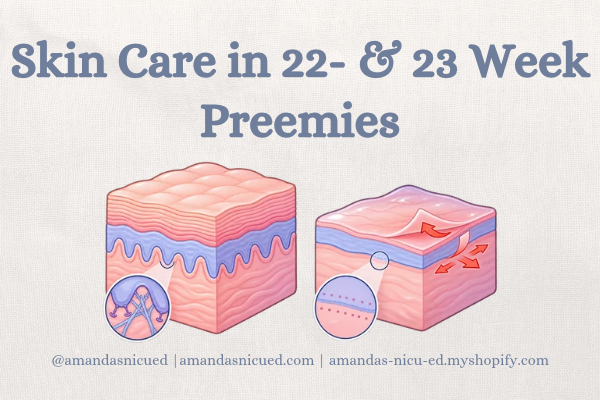
Skin of a 22- or 23-Week Infant
The Skin of a 22- or 23-Week Infant: What Every NICU Nurse Should Understand
Understanding the physiology behind skin protection, humidity, adhesives, and everyday nursing care.
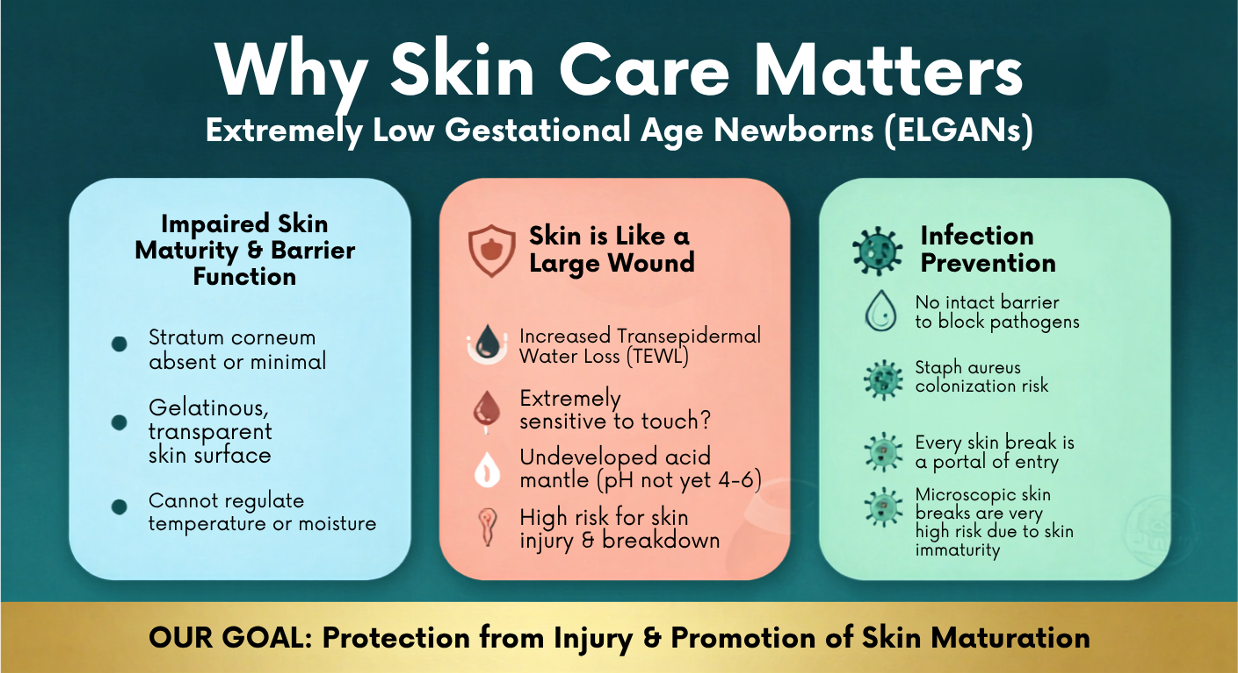
Why is the skin of a 22-week infant so fragile? The stratum corneum, the outer layer that keeps water in and harmful substances out, is barely formed. That one fact affects fluid balance, temperature, infection risk, and nearly every hands-on task we do at the bedside.
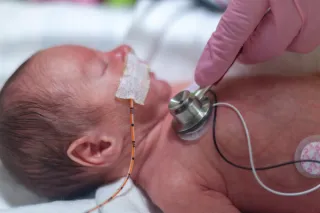
When you care for a baby born at 22 or 23 weeks' gestation, one of the first things you may notice is their skin. It's translucent, delicate, and almost gelatinous in appearance. You can often see the underlying blood vessels, and even the gentlest touch requires careful consideration.
So what makes this skin so different from a term newborn's, and how should that change the care we provide?
We spend a lot of time discussing the immature lungs, brain, gastrointestinal tract, and kidneys of extremely premature infants, and for good reason. But their skin is also an immature organ, and its development has implications for nearly every aspect of their care. From thermoregulation and fluid balance to infection prevention, monitoring, and diaper changes, skin care is about much more than preventing a rash or wound.
When I think about skin care for our most immature infants, I come back to two goals:
• Protect the skin from injury.
• Support the development of a functional skin barrier.
Let's explore the physiology behind these goals and connect it to the nursing interventions we perform every day.
Neonatal skin physiology
The skin is the largest organ in the human body. It helps regulate temperature, maintain fluid and electrolyte balance, protect against microorganisms, provide sensory information, and prevent harmful substances from entering the body. But these functions depend on the skin's structural and functional maturity.
The skin has two primary layers: the epidermis, the outer layer, and the dermis, the deeper layer that contains connective tissue, blood vessels, and other supporting structures.
Within the epidermis is the stratum corneum, the outermost layer of the skin. Think of it as a protective barrier that keeps water inside the body while keeping potentially harmful substances out. In a term infant, the stratum corneum consists of approximately 15 layers of cells. By 26 to 28 weeks' gestation, there may be only two or three layers, and an infant born before 24 weeks may have little or no stratum corneum at all (Boyar et al., 2025; Visscher et al., 2023).
Skin development also doesn't happen uniformly across the body. Keratinization, the process that forms the protective outer barrier, progresses from the head downward. The scalp begins keratinizing around 20 to 21 weeks, while the abdomen may not reach this stage until approximately 23 to 24 weeks (Boyar et al., 2025). So even within the same infant, the skin may be at different stages of development depending on the location.
Without a mature stratum corneum, the skin can't do its protective job well. That makes our extremely premature infants particularly vulnerable to:
Transepidermal water loss and dehydration
Evaporative heat loss
Fluid and electrolyte disturbances
Increased absorption of topical substances
Infection
Skin tears (epidermal stripping) and pressure injuries
This isn't a rare problem. Skin injuries such as epidermal stripping, abrasions, antiseptic burns, blisters, and pressure injuries have been observed in at least 80% of infants born at 22 to 24 weeks' gestation (Boyar et al., 2025; Visscher et al., 2023).
1. Transepidermal water loss: Why humidity matters
One of the most important consequences of an immature skin barrier is increased transepidermal water loss (TEWL), the passive movement of water through the skin and into the surrounding environment.
All of us lose some water through our skin, but a mature stratum corneum limits how much escapes. In an infant born at 22 or 23 weeks, water can evaporate through the skin at a much higher rate. And when water evaporates, it carries heat away with it.
So increased TEWL drives two major challenges: fluid and electrolyte instability and difficulty maintaining body temperature.
What does this mean for NICU nurses?
This is one of the reasons humidification are so important in the early days of life. Raising the relative humidity around the infant reduces the difference in water vapor pressure between the skin and the environment, which decreases evaporative water loss.
But more humidity isn't always better.
As the skin matures after birth, exposure to a less humid environment provides a drying stimulus, sometimes called xeric stress, that helps the stratum corneum develop. Research suggests that prolonged exposure to very high humidity may delay aspects of skin barrier maturation. In one study, 23- to 25-week infants who spent their first week at 85% relative humidity and were then moved to 50% had faster barrier maturation than infants kept at 75% (Boyar et al., 2025; Visscher et al., 2023).
On the other hand, reducing humidity too quickly can increase water and heat loss in an infant whose barrier is still immature. So we're balancing reduced water loss against continued barrier development.
There isn't one universally established humidity protocol for extremely low gestational age infants. As a starting point for units using closed incubators, Boyar and colleagues (2025) suggest considering 80% humidity or higher for the first 3 to 7 days, then weaning to 40% to 50% over the next 2 to 3 weeks. Practices still vary between NICUs, and humidity adjustments should be individualized according to institutional protocols and the infant's clinical condition.
When caring for these infants, consider:
How are the infant's sodium levels, daily weights, and fluid requirements trending?
Is the infant maintaining temperature stability?
Has the humidity recently been adjusted?
Is moisture accumulating beneath the infant or in skin folds?
How is the appearance of the skin changing over time?
The skin, kidneys, and thermoregulatory systems are all connected. A rising sodium, for example, should prompt you to look at the infant's overall water balance, including insensible losses, fluid intake, renal losses, and environmental conditions.
2. Fragile skin attachment: Why adhesives can cause injury
In extremely premature infants, the epidermis and dermis are not as securely attached as they are in more mature infants. The specialized structures at the dermal-epidermal junction that anchor these layers together are still developing. Combine that with an underdeveloped stratum corneum, and the skin becomes highly susceptible to mechanical injury.
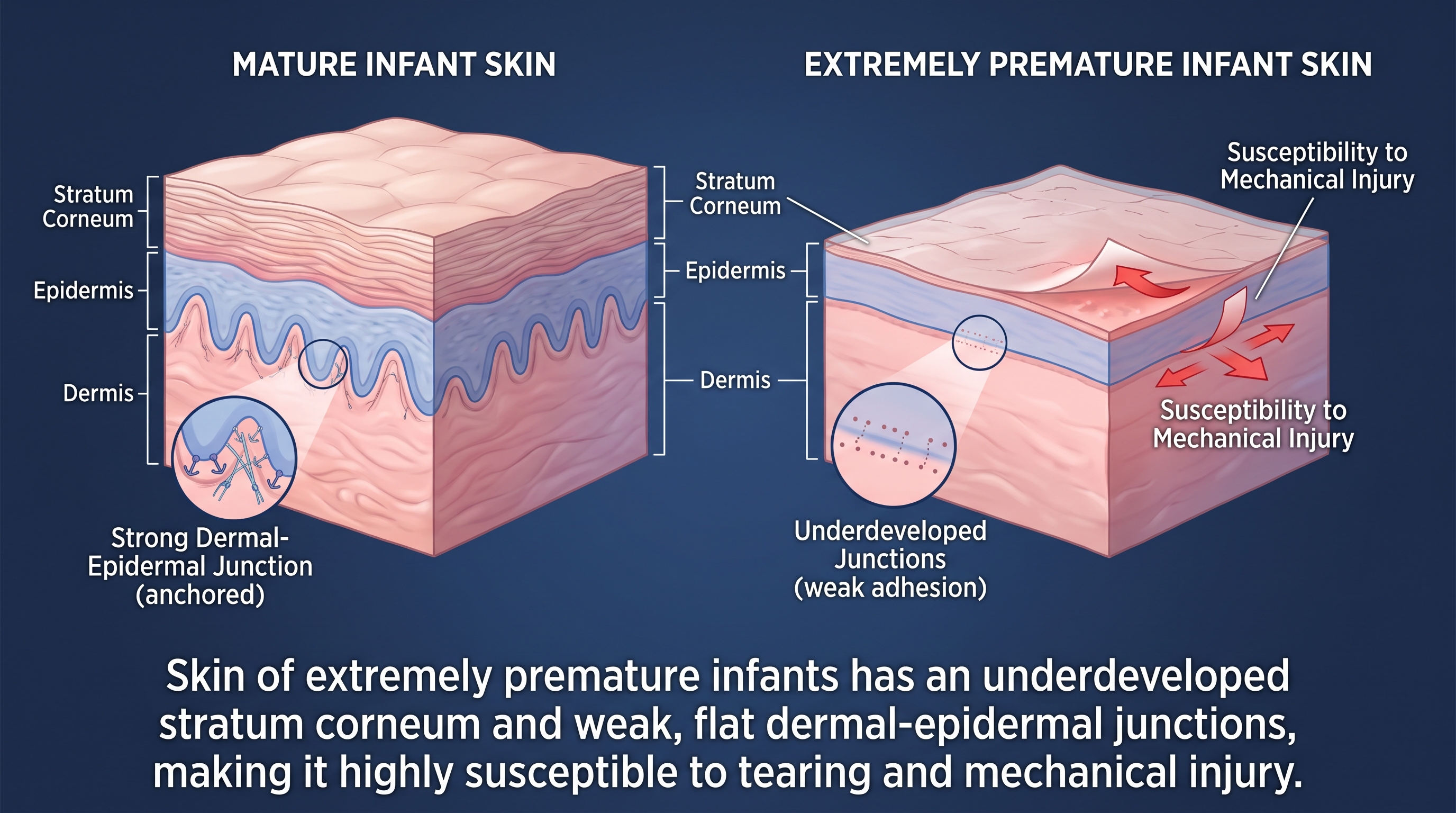
This matters most when we think about adhesives.
Our NICU patients require life-saving equipment: endotracheal tubes, vascular access devices, temperature probes, monitoring electrodes, feeding tubes, and respiratory interfaces. Most of these need to be secured to the skin. When an adhesive attaches more strongly to the epidermis than the epidermis is attached to the dermis, removing it can pull away the superficial skin layers.
This is called epidermal stripping, a type of medical adhesive-related skin injury (MARSI). It doesn't take aggressive tape removal to cause it. Even products we'd traditionally consider gentle can injure skin this immature.
What does this mean for NICU nurses?
First, be intentional about every adhesive you place on the skin. Does this device require an adhesive? Is there a less traumatic alternative? Can we avoid repeatedly removing and replacing the same dressing?
Second, the type of adhesive matters. Silicone-based adhesives are often preferred because they provide securement while generally allowing less traumatic removal than traditional adhesives. Not all silicone products are the same, though, and we'll get to that shortly.
Hydrocolloids and acrylic-based films such as Tegaderm, while useful in other patient populations, carry a significant risk of epidermal stripping in infants born before 24 weeks (Boyar et al., 2025). Bonding agents like Mastisol should also be avoided because they increase epidermal stripping. One targeted exception: some experts still use a thick hydrocolloid as a barrier between the nose and nasal prongs to offload pressure from respiratory interfaces (Boyar et al., 2025; Visscher et al., 2023).
Non-alcohol liquid barrier films placed under devices, dressings, and tapes can add a protective layer between the epidermis and the adhesive (Boyar et al., 2025).
Finally, how you remove an adhesive matters just as much as what you use.
When removal is necessary:
Stabilize and support the surrounding skin.
Use an appropriate silicone-based adhesive remover when indicated and permitted by unit policy.
Slowly roll the adhesive back over itself, keeping it low and parallel to the skin.
Avoid pulling the dressing upward and away from the infant.
Stop and reassess if the skin begins to lift or separate.
Stabilizing the skin and rolling the tape back on itself at a low angle may lessen MARSI. Pay attention to the direction of force. Pulling upward puts tension on those immature connections between the epidermis and dermis. Rolling the adhesive back at a low angle reduces that stress.
3. High humidity doesn't mean the skin should stay wet
In a highly humidified incubator, moisture can accumulate on the skin, beneath the infant, and wherever skin surfaces touch: the axillae, neck folds, groin, and behind the ears.
Excessive moisture can lead to maceration, where the skin becomes overly hydrated, softened, and more easily injured. This is especially concerning when moisture is trapped beneath devices or occlusive dressings. So while we're trying to prevent excessive water loss, we also want to avoid keeping the skin persistently wet.
What does this mean for NICU nurses?
Look at the materials in contact with the infant's skin. Many NICUs use soft cotton fabrics or other protective textiles beneath extremely premature infants. Cotton absorbs moisture, but it can also hold that moisture against the skin (Boyar et al., 2025). A surface that felt dry when you placed it may be damp a few hours later, so check underneath the infant, especially in high humidity.
The same goes for skin folds. Some NICUs use soft, moisture-managing dressings or textiles in areas prone to moisture buildup. The question to ask about any of these products is what happens to moisture when it's against the skin. Does it let moisture escape? Does it wick it away? Or does it trap it? That difference can decide whether a product protects the skin or contributes to maceration.
4. There is no perfect skin care product
One of the challenges in caring for extremely premature infants is that we're always searching for the perfect product: the perfect adhesive, the perfect dressing, the perfect cleanser. In reality, different products serve different purposes, and what works well in one situation may not be appropriate in another.
Take silicone dressings. They're used frequently because of their relatively gentle adhesive properties, but they differ in construction, permeability, absorbency, and intended function. Some soft silicone foams can help manage moisture while protecting against friction and pressure. Other silicone contact layers may hold more moisture against the skin, particularly in highly humidified environments.
The 2025 Journal of Perinatology review by Boyar and colleagues discusses how the same product may behave differently depending on the care environment. An infant in a closed incubator at 70% to 100% humidity and an infant under a radiant warmer with a plastic cover (closer to 40% to 50%) have very different skin needs, so a practice that works well in one setting may not translate to the other (Boyar et al., 2025). The authors describe soft silicone foam dressings such as Mepilex Lite as potentially useful for managing excess moisture in skin folds. They also caution that products such as Mepitel One may retain moisture in highly humidified environments, making them less suitable when the goal is to reduce skin surface hydration.
No product is universally good or bad here. You need to know what you're trying to accomplish and how the product works.
The same principle applies to liquid skin barrier films. Non-alcohol-based barrier films may help protect the skin from irritants or reduce adhesive-related trauma, but their use should be targeted and consistent with institutional guidelines. And a hydrocolloid that protects skin well in older infants may be too adhesive for extremely immature skin.
Before applying any product, ask yourself: What problem am I trying to prevent or treat, and is this the best product for that problem?
5. Skin care and infection prevention: Another balancing act
The skin is an important part of the body's innate immune system. Beyond the physical protection of the stratum corneum, healthy skin has an acidic surface known as the acid mantle, which supports normal skin flora and inhibits the growth of certain pathogens. In extremely premature infants, the acid mantle is not fully developed.
Infants born before 24 weeks may not develop an acidic skin surface for four to eight weeks after birth, possibly longer, and the process is still poorly understood (Boyar et al., 2025). Combine this with an incomplete stratum corneum, and you have an infant who is particularly vulnerable to infection.
Yet infection prevention brings its own risks.
We need to disinfect the skin before invasive procedures, but the antiseptics we use can cause local injury or be absorbed through the immature skin barrier. Chlorhexidine has been associated with chemical skin injuries and concerns about systemic absorption in extremely premature infants, and alcohol-based chlorhexidine formulations carry a higher risk of burns, so know which formulation you're reaching for. Povidone-iodine raises concerns about iodine absorption and thyroid dysfunction. Alcohol-containing antiseptics of any kind can cause significant skin injury, particularly with pooling or prolonged contact. And no randomized controlled trials of these antiseptics have been done in infants born before 24 weeks. The CDC still lists chlorhexidine use in neonates under 1,000 grams or under 2 weeks of age as an unresolved issue (Boyar et al., 2025).
What does this mean for NICU nurses?
Follow your institutional infection prevention protocols while staying mindful of this population's unique vulnerabilities. That includes limiting the amount of skin exposed to an antiseptic, avoiding pooling beneath the infant, allowing appropriate drying time, and avoiding unnecessary friction during application or removal.
If chlorhexidine is used, use the lowest concentration possible on the smallest possible area, applied by gentle blotting rather than rubbing. Boyar and colleagues (2025) suggest considering an aqueous 0.2% or 0.5% preparation with at least 30 seconds of drying time. Visscher and colleagues (2023) recommend blotting off excess with sterile normal saline when 1% to 2% concentrations are used.
Removing excess antiseptic from the surrounding skin can limit ongoing exposure and the risk of chemical injury. Keep in mind, though, that it won't reverse anything already absorbed.
6. Less can be more: Rethinking routine nursing care
Now let's bring this back to the bedside.
Think about your typical head-to-toe assessment. You might obtain an axillary temperature, check a blood pressure, reposition a pulse oximeter, assess vascular access sites, change a diaper, and reposition the infant. For a more mature newborn, these tasks are routine. For an infant born at 22 weeks, every contact with the skin deserves consideration.
Monitoring devices
Some NICUs minimize ECG electrodes during the earliest days of life when a reliable umbilical arterial catheter (UAC) waveform and pulse oximeter are available, to reduce the number of adhesives on extremely fragile skin.
This comes with tradeoffs. A pulse oximeter and arterial waveform provide heart rate, but not the continuous rhythm assessment of an ECG. Minimizing electrodes requires thoughtful consideration of the infant's clinical condition, monitoring needs, and institutional protocols.
The same principle may apply to noninvasive blood pressure measurements. If an infant has a functioning UAC providing continuous invasive blood pressure monitoring, repeatedly inflating a cuff may offer limited additional information while exposing the skin to pressure and friction. Invasive readings still require appropriate waveform assessment, though, and cuff measurements may be necessary when clinically indicated.
And don't forget the pulse oximeter probe itself. The probe and its wrap can cause pressure and heat injury on skin this thin, so check the site and rotate it according to unit policy.
The point isn't to never use these devices. Every intervention should have a purpose, and its benefit should outweigh the potential for skin injury.
Gentle handling and repositioning
The skin of a 22-week infant is particularly vulnerable to friction and shear. Friction occurs when surfaces rub against one another. Shear occurs when forces act in different directions across the tissue. Both can cause injury.
When repositioning these infants, use gentle, supported movements and appropriate positioning supports rather than dragging or sliding the infant across the bed.
Pressure from devices, tubing, and positioning equipment matters too. A small infant can still develop a pressure injury. Their immature tissues and limited ability to reposition themselves make careful device assessment especially important. Respiratory interfaces deserve a close look. In older infants and children, most pressure injuries are device-related, led by noninvasive respiratory interfaces and followed by PIV hubs, pulse oximeter probes, and EEG leads (Boyar et al., 2025). For infants on CPAP or nasal prongs, check the skin under the device every 4 to 6 hours, and consider rotating mask sizes or alternating between masks and prongs as per institutional guidelines (Boyar et al., 2025).
Vascular access sites
PIV infiltration and extravasation can cause some of the most serious skin injuries in this population. Keep insertion sites visible when possible, assess them frequently, and know your unit's extravasation management protocol before you need it.
Bathing, diaper, and perineal care
Routine full-body bathing is generally delayed until at least two weeks after birth in ELBW infants. For infants under 28 weeks, gentle sponge cleansing with body-temperature normal saline or sterile water is recommended, blotting rather than rubbing (Boyar et al., 2025; Visscher et al., 2023). Follow your unit policy on bathing.
During diaper changes, we want to keep the skin clean and protect it from prolonged exposure to urine and stool. But repeated rubbing, wiping, and lifting can also cause trauma. Use gentle cleansing, minimize friction, and apply skin protection when indicated. Remember that perineal skin may be just as immature as the skin elsewhere on the body. A product or technique a term infant tolerates well may not be appropriate for a 22-week infant.
Skin assessment
One of the most important things NICU nurses can do is recognize changes early. Using a validated tool, such as the Neonatal Skin Condition Score, helps make assessments consistent from nurse to nurse and shift to shift.
During your assessments, look for:
New areas of redness, discoloration, or skin tears
Excessive moisture or maceration in skin folds
Skin injury beneath adhesives or monitoring devices
Pressure points from respiratory equipment, probes, or tubing
Changes in vascular access sites
Changes in the skin's overall appearance as it matures
Document those findings clearly. When we work three 12-hour shifts a week, it can be hard to know what the skin looked like the day before. Is it better? Worse? The same? Communicating changes in skin condition, products used, and areas needing close observation supports continuity of care.
7. Skin maturation doesn't happen overnight
One of the fascinating things about extremely premature skin is how rapidly it changes after birth. The shiny, gelatinous appearance of a 22-week infant on day one may look very different a week or two later.
As the stratum corneum develops, the skin gradually becomes less translucent and develops a more recognizable protective surface. Some dryness and flaking is expected as part of this maturation process and doesn't automatically call for a moisturizer (Boyar et al., 2025). Petrolatum-based emollients have been associated with increased skin compromise and infection in extremely low birth weight infants, and because studies in infants born before 24 weeks are lacking, emollients are not currently recommended for routine use in this group (Boyar et al., 2025; Visscher et al., 2023). Follow your unit's guidelines on when they're indicated.
Maturation isn't immediate, and it isn't the same for every infant. Environmental humidity, gestational age, postnatal age, and clinical condition all influence the developing barrier. A 22-weeker who is now seven days old does not have the same skin barrier as a baby born at a more mature gestational age.
That's why we need to reassess our interventions as the infant grows. A product or strategy that was right on day one may not be the best choice on day ten.
What do we know, and what are we still learning?
Despite advances in the survival of infants born at 22 and 23 weeks, there are still significant gaps in our understanding of optimal skin care. Many studies include more mature preterm infants, and their findings can't always be applied directly to babies born at the limits of viability.
We still have open questions about the best humidity strategies, the safest antiseptics, the most effective adhesives and dressings, and how different interventions influence barrier maturation. Two ongoing trials, HumidITI in the United States and HUN-TE in Australia, are looking at how high humidity affects skin maturation and outcomes such as sepsis, chronic lung disease, and mortality. And practice varies considerably between NICUs.
That variation doesn't mean one NICU is doing everything right and another is doing everything wrong. It reflects the reality of caring for an extremely vulnerable population with limited high-quality evidence to guide every decision. What we can do is understand the physiology, evaluate the available evidence, learn from clinical experience, and stay willing to question our practices.
In summary
The next time you care for a 22- or 23-week infant, run through this at the bedside:
Water and heat loss: Is the humidity, fluid balance, and temperature plan working?
Adhesives: Does every adhesive need to be there, and am I removing it low and slow?
Moisture: Is the bedding or any skin fold staying wet?
Pressure and friction: What is pressing on this baby, and how am I moving them?
Absorption: What am I putting on this skin, and how much of it?
Tomorrow: How will today's care affect this skin in a week?
As NICU nurses, we're the ones assessing, touching, repositioning, monitoring, and protecting these infants every shift. When we understand the physiology behind what we're doing, we can be more intentional about the interventions we choose. For me, it always comes back to those two goals: protect the skin from injury, and support the development of a functional skin barrier.
Simple goals, but they take thoughtful, individualized care. That's what makes caring for our smallest patients so challenging, and so meaningful.
Follow the ELBW series
This post is part of my ELBW series, where I break down the physiology and bedside care of our smallest patients. Follow along on Instagram, TikTok, and YouTube @amandasnicued so you don't miss the next one.
And I want to hear from you. What skin-related questions do you have about caring for infants born at 22 or 23 weeks? Reply or drop them in the comments, and I may answer them in an upcoming post or video. I'd also love to know what your NICU does: Do you use high humidity? Avoid certain adhesives or monitoring devices? Have a favorite product for protecting skin folds?
References
Boyar, V., Visscher, M., Lund, C., Narendran, V., & Tiny Baby Collaborative Steering Committee. (2025). Seeing beyond the obvious: Pragmatic skin care guidance for infants 22-24 weeks gestational age. Journal of Perinatology. https://doi.org/10.1038/s41372-025-02375-1
Visscher, M. O., McKeown, K., Nurre, M., Strange, R., Mahan, T., Kinnett, M., Campbell, D., Baker, R. B., & Narendran, V. (2023). Skin care for the extremely low-birthweight infant. NeoReviews, 24(4), e229-e242. https://doi.org/10.1542/neo.24-4-e229
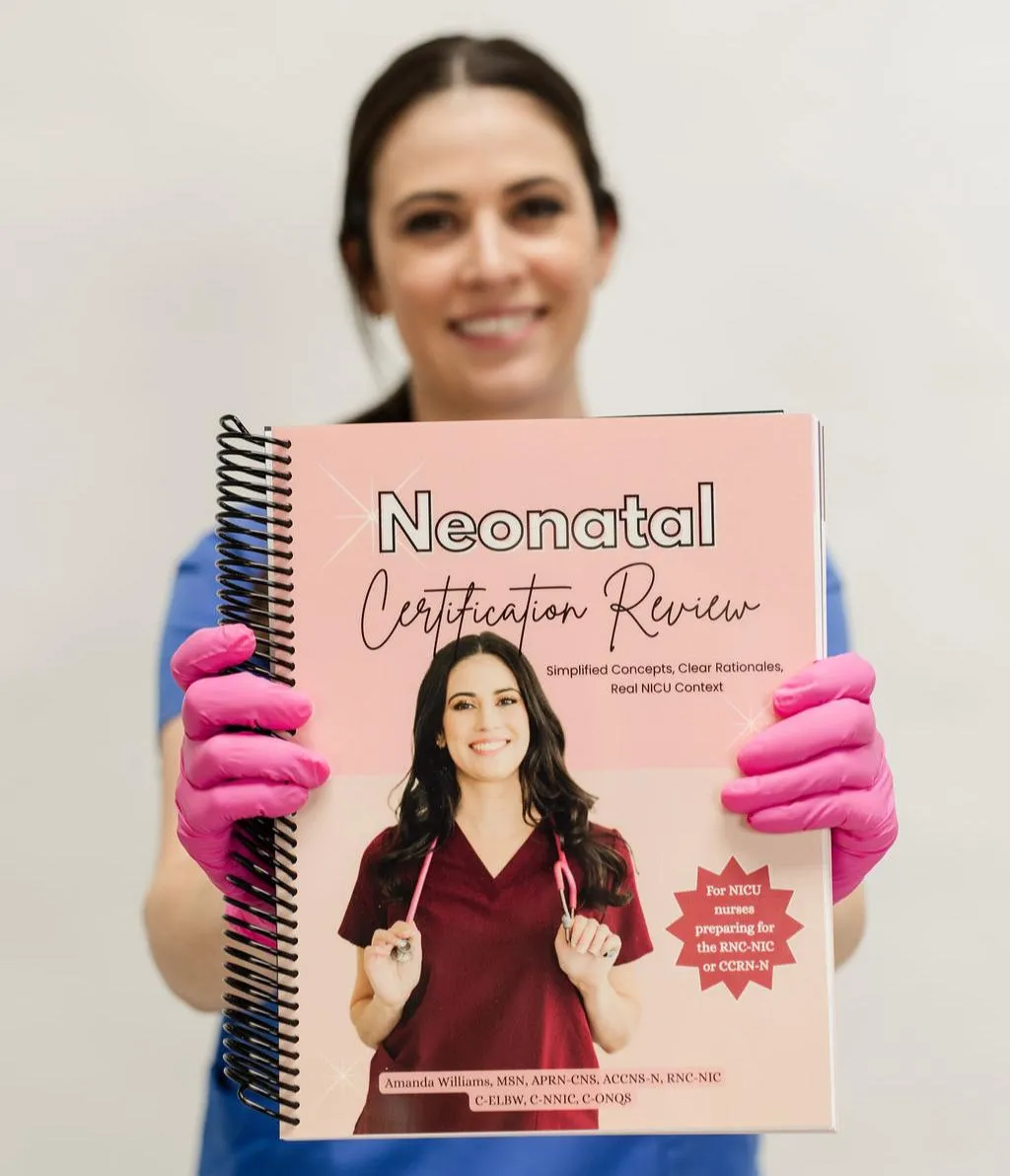
NEONATAL CERTIFICATION
REVIEW BOOK
📌 What’s Inside:
- 13 comprehensive chapters covering core NICU certification content
- Clear, organized breakdowns for fast recall
- Peer-reviewed to ensure clinical accuracy and depth
- Ideal for RNC-NIC or CCRN-N prep — or as a reference guide for NICU nurses at any level
- Plenty of space to write in and take notes
📚Table of Contents:
- Maternal Health & Birth History
- Intrauterine to Extrauterine Transition
- Neonatal Resuscitation
- Thermoregulation
- Neurologic System
- Respiratory System
- Oxygen, Ventilation, & Acid-Base Balance
- Cardiovascular System
- Nutrition & Feeding
- Hematopoietic System
- Infection & Immunology
- Professional Practice

Ready to kickstart your journey to becoming a certified NICU nurse?
Look no further!
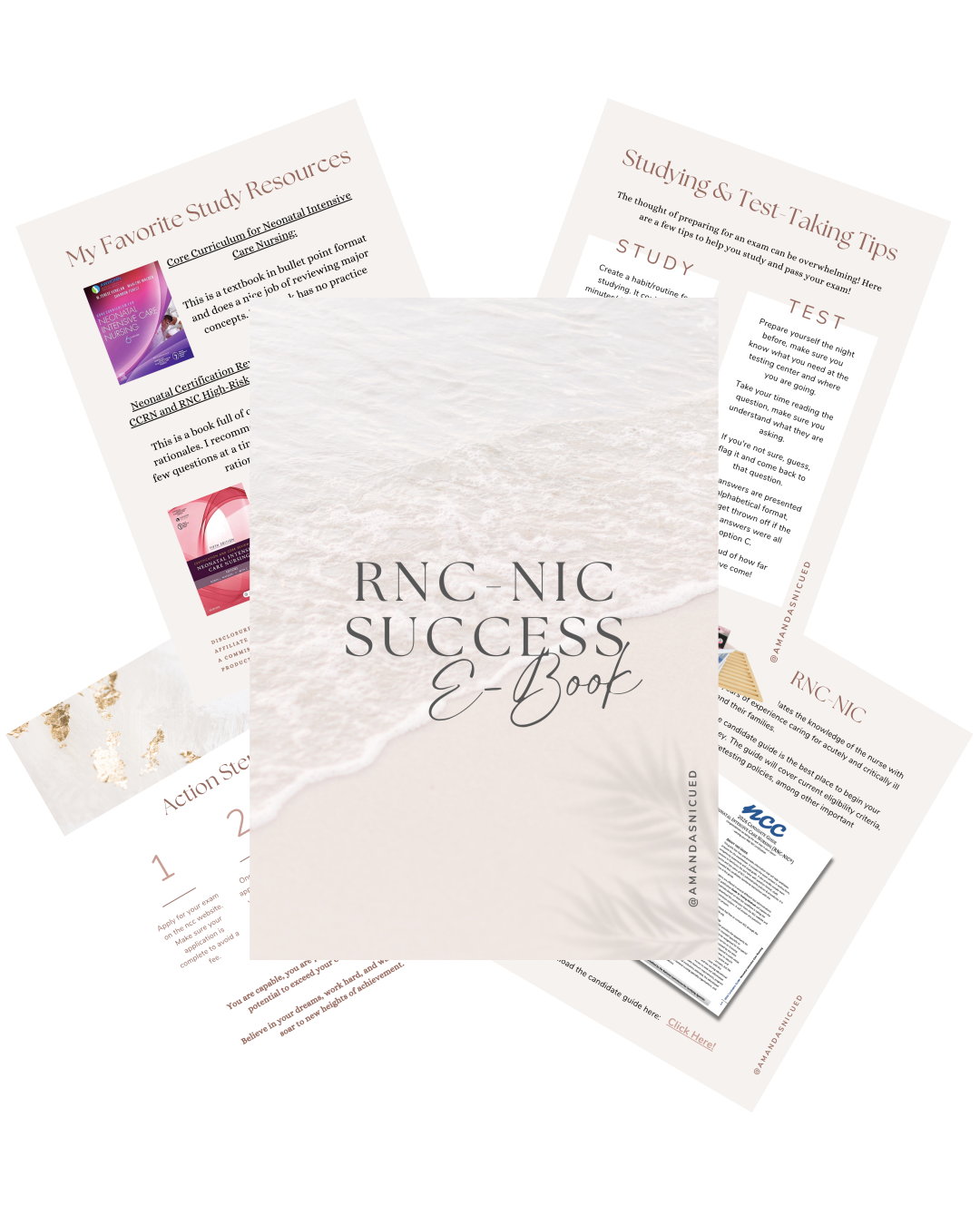
Grab my FREE E-Book packed with essential study and test-taking strategies for the RNC-NIC.
In the E-Book I give you the resources you need including the link to access the candidate guide, several types of books to study from, some of my favorite strategies, an outline of the content you should review, and a blank calendar for you to make your study plan!
Frequently Asked Questions About the RNC-NIC exam

What is the RNC-NIC?
The RNC-NIC is a competency-based exam that tests the specialty knowledge of nurses in the United States & Canada who care for critically ill newborns and their families.
The RNC-NICU is a nationally recognized certification that recognizes the registered nurse for their specialty knowledge and skill.

Who can take the RNC-NIC exam?
Nurses can take this exam after a minimum of two years experience in the NICU caring for critically ill newborns and their families.

Which books should I use?
I'm glad you asked! There are many excellent books to help you prepare for the RNC-NIC, I gathered ande describe each of them for you in my FREE e-book.
Is there a course to help me study?
Yes! Many hospitals host their own certification course and there are a few online courses. See my RNC-NIC test taking tips E Book for more information
What happens if I don't pass the exam?
If you don't pass the exam on your first try you can try again after 90 days. You will have to reapply after 90 days and pay a retest fee. There is no limit to the number of times you can take the exam (however a candidate can only sit for the exam twice per year).
Can I make more money if I take the RNC-NIC exam and get certified?
Yes! Many hospitals provide a raise or a bonus for nurses with specialty certifications. Hospitals also typically hire at a higher base salary when nurses have a certification.


Find me @amandasnicued on these channels or Email me
hey nurses don't miss out
© Copyright 2024. AmandasNICUEd. All rights reserved. | Terms & Conditions | Privacy Policy Contact: [email protected]