
Welcome to Amanda's NICU Education


Hi! My name is Amanda. I'm a NICU nurse, Clinical Nurse Specialist, NICU Educator... basically your NICU BFF. If you want to talk NICU, I'm here for you! I love everything about NICU nursing and I'm eager to learn and share my knowledge with all my NICU friends.
I have been a NICU nurse since 2009 I am currently a Clinical Nurse Specialist in a Level IV NICU in Los Angeles.
I am passionate about educating the next generation of NICU nurses. I share my knowledge through platforms such as Instagram and Facebook and am excited to have you here on my website!
Click on the button below to sign up for my newsletter filled with NICU education and tips for all experience levels.

Not very many people love taking tests but as a self-acclaimed "forever student" who has taken (and passed) five different certification exams I am no longer afraid of tests! "Way to brag", you might be thinking but I want to help YOU pass your certification exam too!
Introducing Amanda's RNC-NIC Success digital course - your ultimate study companion!
Gain unlimited, on-demand access for life, ensuring you're primed to ace your certification exam.
I'm here to help you succeed and I can't wait for you to share with me that you PASSED the RNC-NIC EXAM!!!






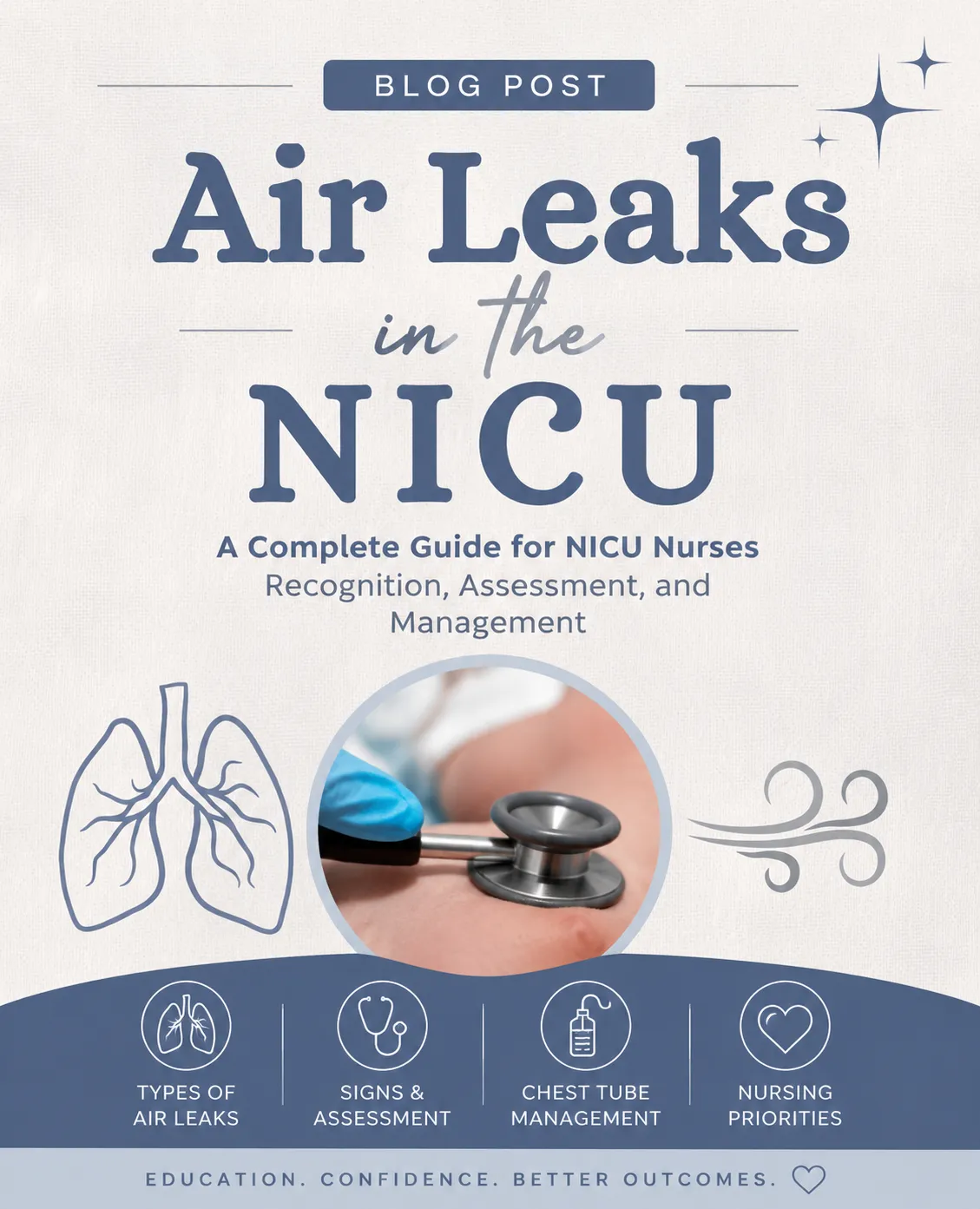
Air Leaks in the NICU
Neonatal Air Leak Syndromes: A Complete Guide for NICU Nurses
Learn how to recognize, assess, and manage neonatal air leaks—including pneumothorax, pulmonary interstitial emphysema (PIE), pneumomediastinum, and chest tube management.
If you've worked in the NICU for any length of time, you've probably experienced it.
A baby who was stable just minutes ago suddenly develops increasing oxygen requirements, worsening work of breathing, or bradycardia. The room fills with providers. Someone grabs the transilluminator. Another nurse begins gathering supplies for a needle thoracentesis.
Air leak syndromes are among the most time-sensitive emergencies NICU nurses encounter.
The good news? Understanding the underlying physiology and recognizing the early warning signs can help you respond quickly and confidently.
In this guide, we'll review the different types of neonatal air leaks, who is most at risk, how they're diagnosed, treatment options, and the nursing care every NICU nurse should know.
What Is a Air Leak?
An air leak occurs when air escapes from the lungs and travels into spaces where it shouldn't normally be present. Instead of remaining inside the alveoli for gas exchange, increased pressure causes the alveoli to rupture, allowing air to track into surrounding tissues.
Depending on where that air travels, the infant may develop:
Pneumothorax
Pneumomediastinum
Pulmonary Interstitial Emphysema (PIE)
Pneumopericardium
Pneumoperitoneum (Rarely)
Although these conditions all involve escaped air, each has different clinical implications and management strategies.
Which Babies Are Most at Risk?
Not every infant develops an air leak.
Several factors increase the risk, including:
Prematurity
Low birth weight
Respiratory Distress Syndrome (RDS)
Meconium Aspiration Syndrome (MAS)
Transient Tachypnea of the Newborn (TTN)
Mechanical ventilation
Positive pressure ventilation
High ventilator pressures
Research has shown that air leaks occur more frequently in extremely premature infants and are associated with higher rates of bronchopulmonary dysplasia (BPD), brain injury, and mortality.
Types of Neonatal Air Leak Syndromes
Pneumothorax
A pneumothorax occurs when air enters the pleural space between the lung and chest wall.
This is the most common neonatal air leak and may be:
Spontaneous
Secondary to lung disease
Traumatic
Tension
Persistent
A tension pneumothorax is a true neonatal emergency because trapped air compresses the lung, shifts the mediastinum, decreases venous return, and ultimately reduces cardiac output.
Pneumomediastinum
With pneumomediastinum, air collects within the mediastinum instead of the pleural space.
Classic chest X-ray findings include:
Spinnaker Sail Sign
Angel Wing Sign
Continuous Diaphragm Sign
Many cases resolve without invasive intervention, but recognition is important because the radiographic appearance can be alarming to new clinicians.
Pulmonary Interstitial Emphysema (PIE)
PIE develops when alveoli rupture and air tracks into the lung's interstitial tissue.
It is seen most commonly in premature infants requiring mechanical ventilation.
Treatment focuses on reducing additional lung injury through:
Lower mean airway pressures
High-frequency ventilation
Positioning the affected lung down when appropriate
The goal is minimizing ongoing barotrauma while allowing the injured lung to heal.
Pneumopericardium
Although rare, pneumopericardium is one of the most dangerous air leak syndromes.
Even a small amount of air surrounding the heart can lead to cardiac tamponade.
Clinical findings may include:
Bradycardia
Hypotension
Poor perfusion
Narrow pulse pressures
Muffled heart sounds
This condition requires immediate recognition and urgent intervention.
Signs and Symptoms Every NICU Nurse Should Recognize
Some small air leaks produce very few symptoms.
Larger air leaks often present with:
Sudden increase in oxygen requirement
Tachypnea
Nasal flaring
Grunting
Asymmetric chest movement
Decreased breath sounds
Hypercapnia
Acidosis
Bradycardia
Hypotension
Poor perfusion
Sudden decompensation
One of the biggest clues isn't a single assessment finding—it's recognizing a baby who suddenly looks different than they did five minutes ago.
How Are Air Leaks Diagnosed?
Diagnosis often combines bedside assessment with imaging.
Transillumination
Many NICUs use transillumination as a rapid bedside assessment for suspected pneumothorax. It's like a screening for an air leak while waiting for x-ray.
When performed in a dark room using a cool light source, excessive illumination on one side of the chest may indicate free air.
It's important to remember that false positives and false negatives can occur, so clinical judgment remains essential.
Chest X-Ray
Chest radiography confirms the diagnosis and helps distinguish between different air leak syndromes.
Certain findings, such as mediastinal shift, suggest a tension pneumothorax requiring emergent treatment.
Chest Tube Management: Nursing Priorities
Chest tube care extends far beyond simply monitoring drainage.
NICU nurses should routinely assess:
Respiratory status
Breath sounds
Work of breathing
Drainage amount and color
Dressing integrity
Tubing security
Bubbling
Tidaling
Overall perfusion
Pain management
The drainage system should always remain below the level of the infant's chest to prevent backflow. Connections should remain secure, and accidental dislodgement must be prevented by properly anchoring the tubing.
Understanding Bubbling vs. Tidaling
Tidaling
Tidaling refers to normal fluctuations in the water seal chamber with respirations.
Its absence may indicate:
Lung re-expansion
Tube obstruction
Further assessment is required.
Bubbling
Continuous bubbling typically indicates an air leak.
Briefly clamping the tubing near the infant (following your organization's policy and only long enough to troubleshoot) can help determine whether the leak originates from the patient or the drainage system.
Helping Families Through an Air Leak Emergency
Parents often remember the fear of seeing a chest tube more than the procedure itself.
NICU nurses play a critical role by:
Explaining equipment in simple language
Providing frequent updates
Encouraging parental involvement when appropriate
Normalizing fear and anxiety
Celebrating small improvements
Even during emergencies, clear communication builds trust and reduces uncertainty for families.
Key Takeaways
Air leak syndromes require rapid assessment, strong critical thinking, and coordinated teamwork.
Remember these high-yield pearls:
✔ Pneumothorax is the most common neonatal air leak.
✔ Sudden decompensation should always prompt consideration of an air leak.
✔ Tension pneumothorax is a life-threatening emergency.
✔ Bubbling indicates an air leak.
✔ Tidaling reflects changes in intrapleural pressure and should be interpreted in clinical context.
✔ Proper chest tube assessment goes far beyond measuring drainage.
Want to Feel More Confident Managing Neonatal Chest Tubes?
Recognizing an air leak is only the beginning. Knowing what to do next is what builds confidence at the bedside.
In my 2-hour Air Leaks & Chest Tubes CE Course, I walk NICU nurses through:
The pathophysiology behind each type of neonatal air leak
Chest tube insertion and drainage systems
Needle thoracentesis preparation
Nursing assessment pearls
Real-world clinical scenarios
Certification-style review questions for RNC-NIC and CCRN-N preparation
Whether you're preparing for certification or simply want to feel more confident during one of the NICU's most critical emergencies, this course is designed to help you care for your smallest patients with greater knowledge and confidence.
Ready to learn more? Explore the course and take the next step in your NICU education.

December 2023 Certification Review Webinar
NICU Certification Review
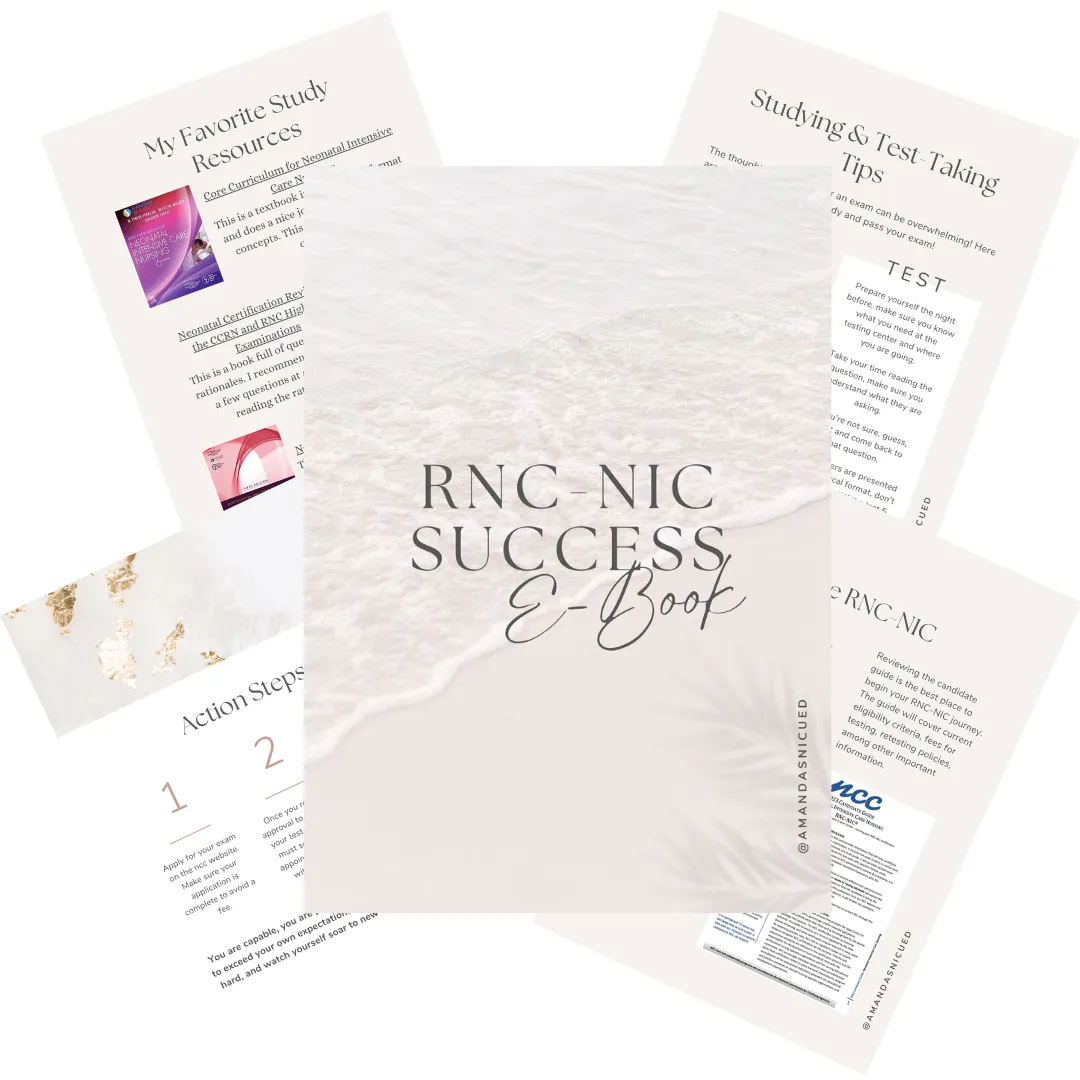
Ready to kickstart your journey to becoming a certified NICU nurse?
Look no further!
Grab my FREE E-Book packed with essential study and test-taking strategies for the RNC-NIC.
In the E-Book I give you the resources you need including the link to access the candidate guide, several types of books to study from, some of my favorite strategies, an outline of the content you should review, and a blank calendar for you to make your study plan!
Frequently Asked Questions About the RNC-NIC exam

What is the RNC-NIC?
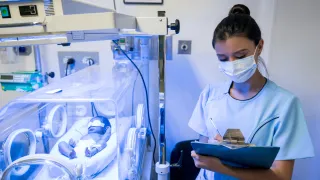
The RNC-NIC is a competency-based exam that tests the specialty knowledge of nurses in the United States & Canada who care for critically ill newborns and their families.
The RNC-NICU is a nationally recognized certification that recognizes the registered nurse for their specialty knowledge and skill.
Who can take the RNC-NIC exam?
Nurses can take this exam after a minimum of two years experience in the NICU caring for critically ill newborns and their families.

Which books should I use?
I'm glad you asked! There are many excellent books to help you prepare for the RNC-NIC, I gathered ande describe each of them for you in my FREE e-book.
Is there a course to help me study?
Yes! Many hospitals host their own certification course and there are a few online courses. See my RNC-NIC test taking tips E Book for more information
What happens if I don't pass the exam?
If you don't pass the exam on your first try you can try again after 90 days. You will have to reapply after 90 days and pay a retest fee. There is no limit to the number of times you can take the exam (however a candidate can only sit for the exam twice per year).
Can I make more money if I take the RNC-NIC exam and get certified?
Yes! Many hospitals provide a raise or a bonus for nurses with specialty certifications. Hospitals also typically hire at a higher base salary when nurses have a certification.

Find me @amandasnicued on these channels or Email me
hey nurses don't miss out
© Copyright 2024. AmandasNICUEd. All rights reserved. | Terms & Conditions | Privacy Policy Contact: [email protected]